If your swarm looks similar to these then they are definitely honeybees and beekeepers should be able to collect them.
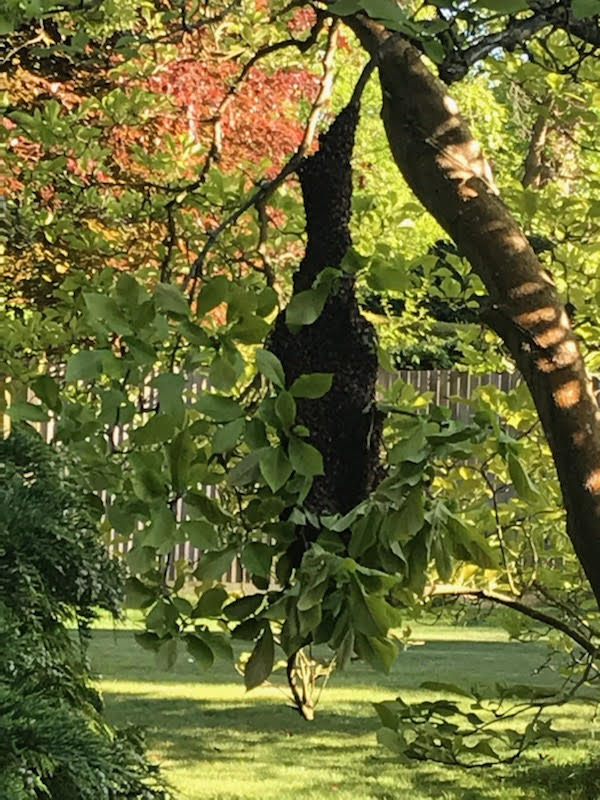
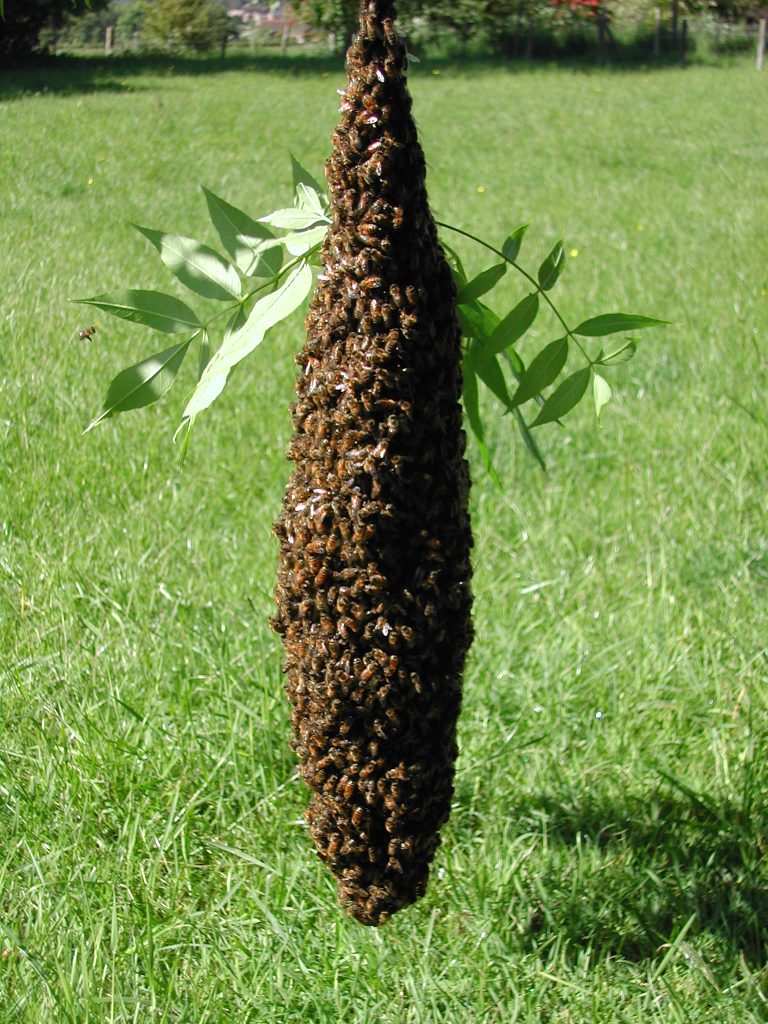
I have a Swarm / Swarm Collection
During the Spring and Summer swarming season (usually April to July) our Branch offers a swarm collection service to the general public. For details of Swarm Collectors in the Sevenoaks & Tunbridge Wells Area click below:-
Swarm collectors in Sevenoaks & Tunbridge Wells Areas
For collection in other areas click on the British Beekeepers Association and their “Find A Swarm Collector” option to reach a searchable map of the UK where you can enter your postcode on the map to find someone close to the swarm/you.
If you cannot contact the swarm collector nearest to you, please go to the next nearest name on the list. Be patient, because during the swarming season all of us may be very busy collecting swarms!
We usually make a charge to cover our petrol expenses and time. Normally we charge £25/£45 for a callout, depending on distance, difficulty and whether collection could involve returning in the evening to collect the flying bees, but this is open to discussion with the collector.
I want a Swarm
If you are looking for a swarm to start your beekeeping journey or perhaps to replace winter losses please add your name to our Swarm Request List here swarm-request-list.
Bees in Buildings
The bees you see flying around a swarm are scout bees searching for a suitable new home to relocate into. Scout bees will be checking out locations such as a large hole in a tree, under roof tiles or inside cavity walls, in a chimney, under the floor boards of a house or inside an outbuilding, or even an empty beehive.
If they take up residence in your home this could involve scaffolding or a cherry picker to gain access at height and a great deal of time, disruption and cost to get them removed. It’s therefore very important to act quickly as soon as you see the swarm settle because if they stay for a number of days, they are very difficult to remove.
To see what’s involved click onBees in Buildings.
Other Insects
If however the insect looks like one of the pictures below they are wasps and beekeepers do not collect these.
They are good for the garden as they feed their brood on greenfly etc… But if they are a nuisance, a pest control officer will deal with them or you can buy a ‘Wasp Spray’ from a hardware store, B & Q or Homebase and spray the foam at the entrance of their nest.
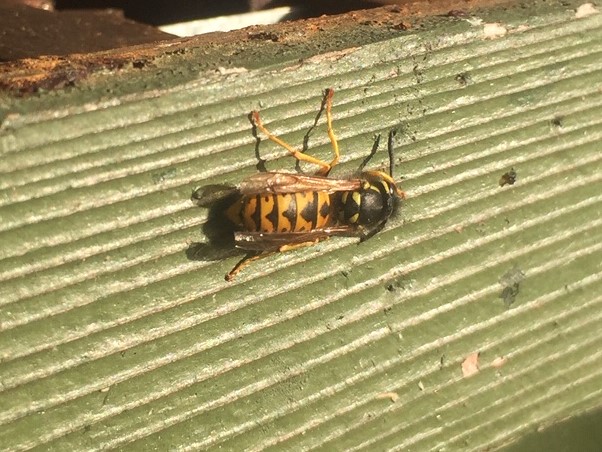
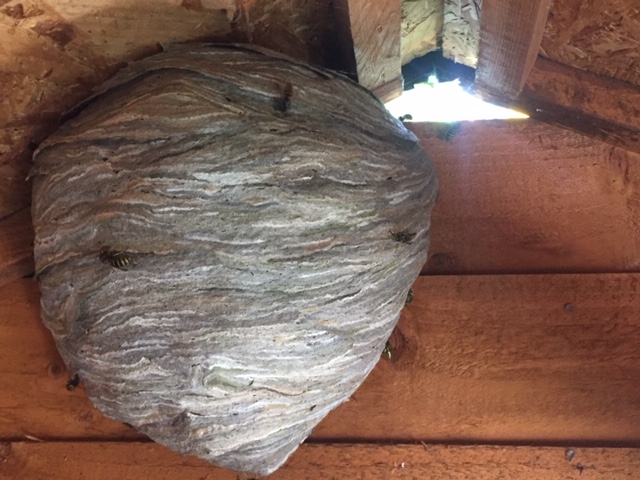
Common Wasp above and their football sized nest
The above picture was taken on 25th June 2020 in a Kemsing garden shed and may not be totally complete as there are wasps still on the outside!! It was made, probably 2 months earlier, initially by the queen who lays worker brood which then hatch and complete the build by rasping away at the shed timber to build this papier mache very light structure.
If your bee looks like this, they are bumblebees.
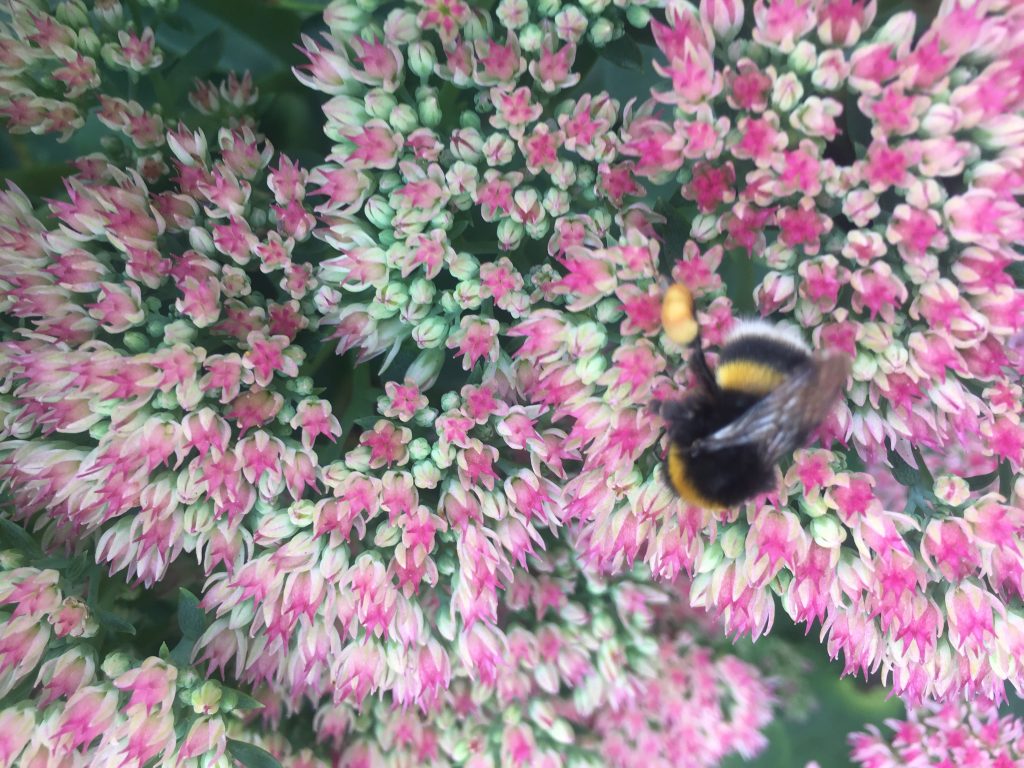
Image by John Farrow
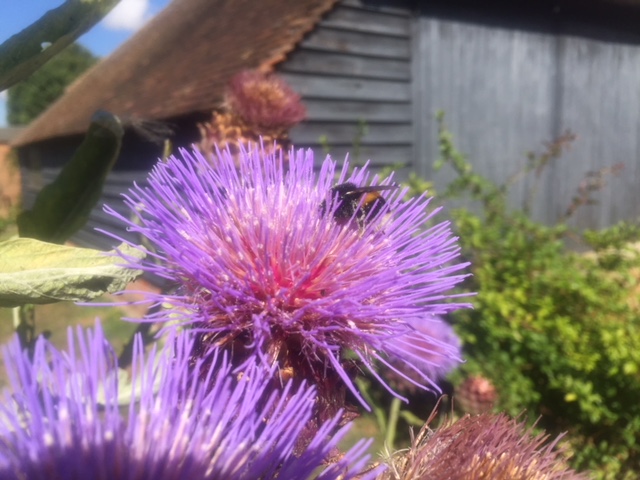
Image by John Farrow
Bumblebees very rarely sting and if you have a nest it will only last a couple of months for all their brood to hatch.
However if they are causing a problem and they are reasonably accessible, beekeepers may re-locate them subject to discussion.
To help with identification of various types of bee, please click here to visit the BBKA web site identification page.
Examples of Swarm Collection
Examples of swarms collected by the Sevenoaks Team in PDF format can be downloaded by clicking the link below:
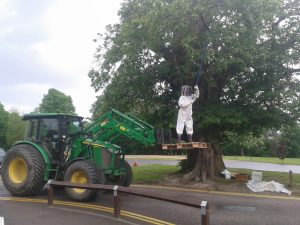
Using an extended swarm catcher and standing on a raised pallet, it appears nothing is too difficult for Sarah Rapley, one of our intrepid Sevenoaks team!!
A Frustrating Day in the life of a Swarm Collector.
Vic Webb Collecting a Swarm 15 ft up a tree.
Swarms removed by the Sevenoaks Team
For a more unusual location and extraction of bees, take a look at these examples: